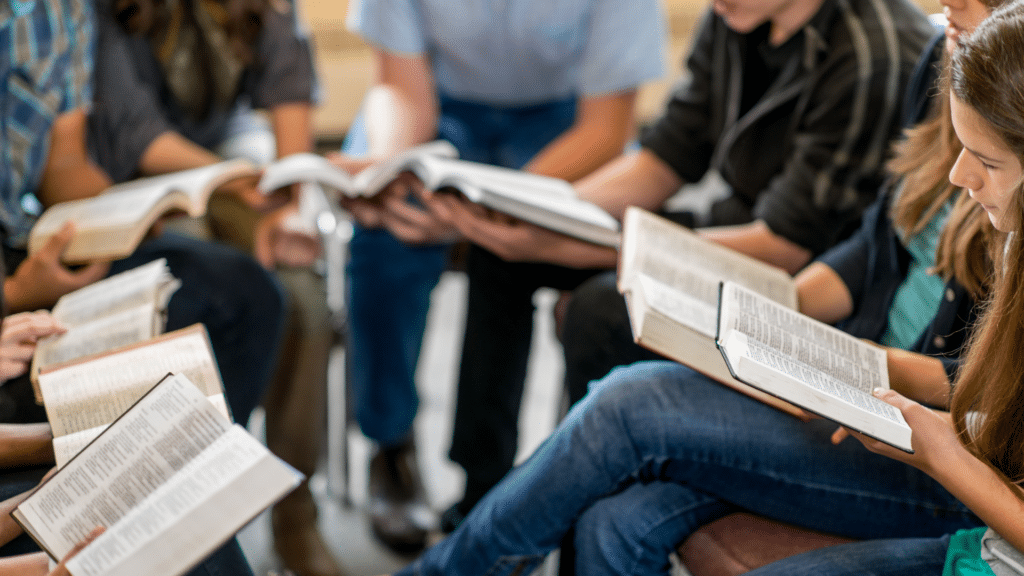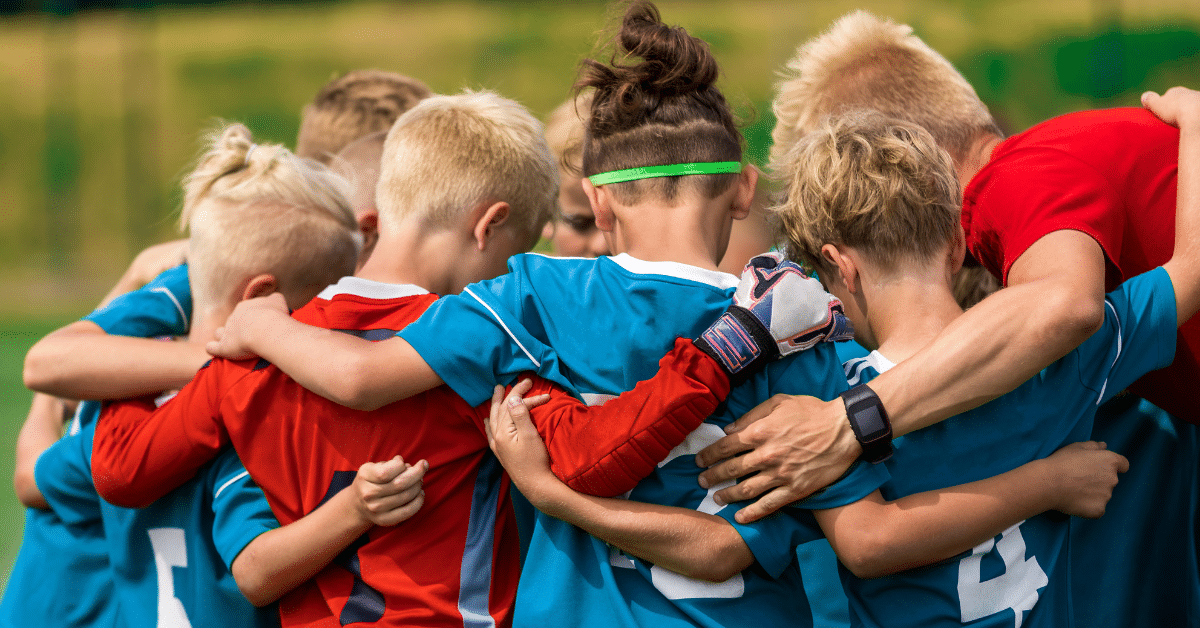

We are living in a lonely nation and serving in quiet churches.
Our nation and our churches are operating at two deficits:
-
- A societal deficit: the collapse of social capital.
- A church deficit: the collapse of ongoing evangelism emphasis.
I will first explain the problem, then how I believe sports and recreation ministries can solve both.
The Collapse of Social Capital in Society
So, what is social capital? Social capital is the “relational glue” that enables a neighborhood, team, church, or town to function well, because people know each other, trust each other, and show up for each other. It’s the answer to questions like: Who do you call if you need help finding a job, moving in a new sofa, have a theological question, or want to hang out for the weekend?
In Philippians 2:2 Paul writes, “Then make me truly happy by agreeing wholeheartedly with each other, loving one another, and working together with one mind and purpose.” This verse is a biblical description of what social capital looks like inside the people of God: unity, love, and shared purpose. Not just as a slogan, but as a lived reality.
In many ways, God invented social capital. About 30 years ago, social scientists just discovered what God had already done (and what is supposed to be common sense among Christians and in the church). But over the past several decades, that “relational glue” has broken down in our nation and in our culture. For example, in the early 2000s, older teens spent an average of 2.5 hours hanging out with friends every day. Today, older teens only spend about 45 minutes hanging out with friends each day.
We’re not gathering as much anymore (including church attendance!). As a result, we don’t trust each other as much. Consider this chart from researcher Ryan Burge.
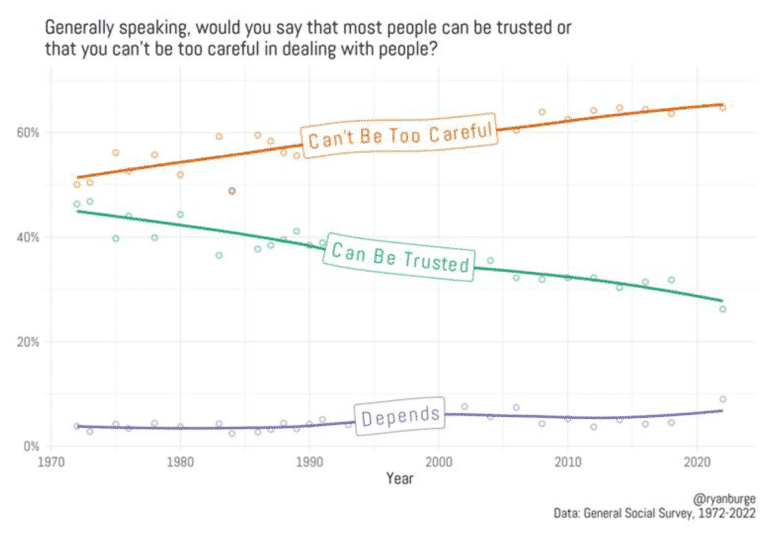
And this is where the disconnect becomes painfully obvious: we meet a lot of people, but we don’t truly know many people. The average person today meets as many people in one year as our grandparents did in a lifetime. But being in proximity to someone is not the same as trusting them.
We have hundreds of interactions with people every week, but most people are in our lives because they are useful to us. That’s not necessarily a bad thing. We have to be useful to each other. The crossing guard helps the kids across the street. The barista makes you a coffee. But this isn’t friendship. A true friend is there for you when you are at your most useless.
There is a loneliness problem in our society. Unfortunately, our churches are too quiet.
The Collapse of Evangelism in Churches
Only 1% of churches have an ongoing evangelism emphasis. That’s not saying churches never do outreach. But very few churches sustain evangelism as a consistent priority. Here’s a fascinating finding from a national Church Answers Research project on the unchurched: non-attendees view the church as more relevant today than churchgoers.
Among the churched, 40% agree or strongly agree that the church is largely irrelevant today, while only 27% of the unchurched believe the church is largely irrelevant. But the issue of trust is a different story. Attendees generally trust their churches (81%) and pastors (76%), while trust levels are lower among non-attendees with churches (30%) and pastors (35%).
The dichotomy is striking: churched people say, “I trust the church but believe it’s irrelevant today.” Unchurched people say, “The church is still relevant but not trustworthy.” How is this possible? Back to our original two problems: the collapse of social capital in society (trust) and the lack of outreach in churches (belonging).
The Bridge: Sports and Recreation Ministries
So how can we solve these two deficits? Picture a Venn diagram: one circle represents the loss of social capital in society, the other represents the lack of evangelism in the church, and the overlap represents sports and recreation ministries.
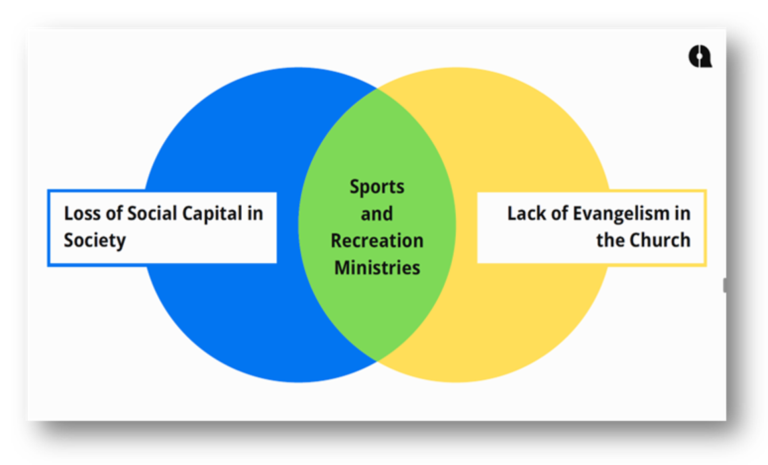
Sports ministry doesn’t replace evangelism. Done well, it restores evangelism as a normal rhythm. It also rebuilds social capital through both bonding and bridging.
-
- Bonding: deepening relationships among similar people (teams, groups, consistent volunteers).
- Bridging: forming relationships across differences (age, class, background, church/non-church).
Sports and recreation ministry rebuilds social capital because it creates the kind of repeatable, embodied community that our culture is steadily losing. You don’t have to manufacture connection from scratch—teams and leagues naturally generate trust over time because people keep showing up, seeing each other, and sharing a common experience. And unlike many church entry points that feel formal or intimidating to outsiders, sports settings feel normal, welcoming, and relationally “safe.” In other words, sports ministry has several built-in “accelerators” that do the work of reconnecting people.
-
- Frequency: weekly practices and games create relational repetition—people don’t just meet once; they grow familiar over time.
- Proximity: participants are physically present, face-to-face, which builds trust faster than digital interaction ever can.
- Shared identity: “We’re on the same team” creates immediate belonging and a reason to care about one another.
- Low pressure: people can enter without feeling “targeted,” so walls come down and relationships can form naturally.
Your community is hungry for belonging. And Jesus is still saving people. Sports and recreation ministry can be the bridge: rebuilding social capital and restoring evangelism. We don’t have to be a lonely nation. We aren’t called to be a quiet church. Sporting events can get quite loud with the cheers of fans. Let’s make heaven roar with a crowd of worshipers for Jesus.
Upward Sports is one of the best options available for churches that want a proven, turnkey way to leverage sports and recreation for ministry, without reinventing everything from scratch. If you’re looking for a trusted partner to launch or strengthen a sports outreach, Upward Sports is a wise place to start.
Posted on June 22, 2026
Dr. Sam Rainer serves as president of Church Answers and as the lead pastor at West Bradenton Baptist Church in Bradenton, Florida. He writes, teaches, speaks, and consults on a variety of church health issues. Sam cohosts the popular podcast Rainer on Leadership.
Sam is the author of several books, including “The Church Revitalization Checklist,” “Understanding the Bible as a Whole,” and “The Surprising Return of the Neighborhood Church.” He has written hundreds of articles for several publications and is a frequent conference speaker on church health issues.
Sam holds a BS in finance and marketing from the University of South Carolina, an MA in missiology from Southern Seminary, and a PhD in leadership studies from Dallas Baptist University. He lives in Bradenton with his wife and four children.
More from Sam